Same AI, Three Horizons: Why the Application Decides the Innovation

AI models are a great innovation. Using them rarely is. The three horizons show why the application, not the technology, decides the innovation.

AI models are a great innovation. Using them rarely is. The three horizons show why the application, not the technology, decides the innovation.
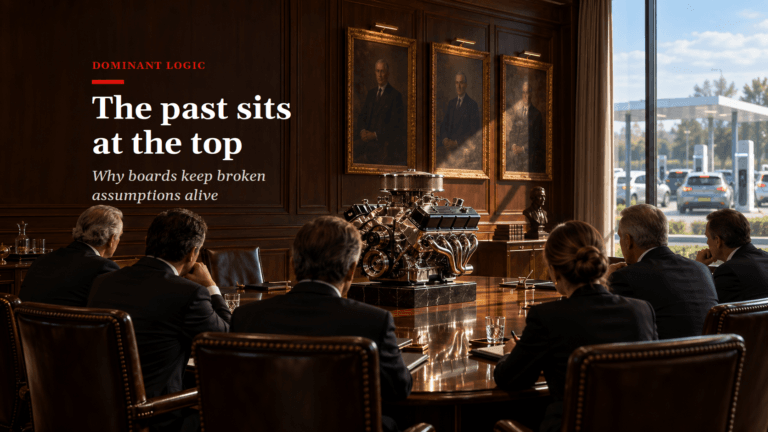
Why do carmakers cling to broken assumptions? Data on German car boards since 2012 shows how dominant logic lives in the people at the top.

There is a debate raging across Germany and much of Europe about how cars should be powered in the future. Battery-electric. Hydrogen. eFuels. HVO100. The framing is almost always the same: which technology is best? Which one is cleanest, most convenient, most German? The word you hear most often is Technologieoffenheit – technology-openness, the noble-sounding demand that we keep all…

This post argues that sustaining innovation — accelerators, innovation labs, venture clienting, e-fuels, hydrogen engines — is not dangerous because it fails, but because it works. Working results are the reason nobody has to ask whether the business model still holds. The argument runs through four cases: the record labels and DRM, thirty-five years of German automotive from the 1991…

Why a clean fuel is not a business model — and how Rumelt’s test tells them apart There is a particular move in public debate that I have come to find more interesting than the topics it is applied to. Someone produces a careful, narrow, technically honest piece of analysis. Then a second group picks it up, strips away the…
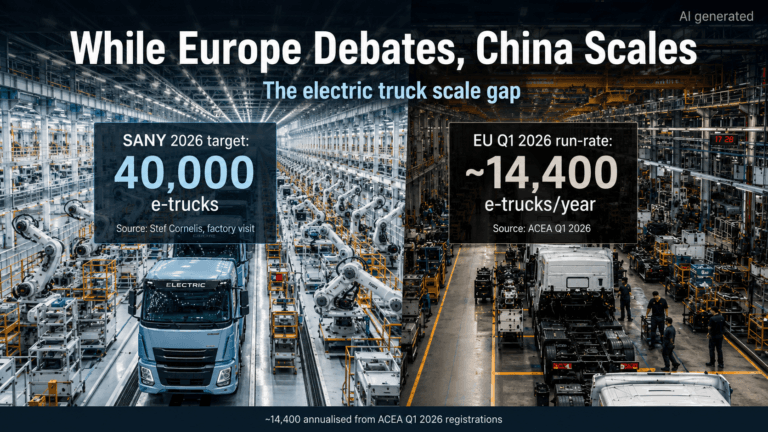
This post was inspired by Stef Cornelis, who visited SANY’s electric truck plant in China and shared his first-hand observations on LinkedIn. If you want sharp, on-the-ground insights into the future of electric mobility, follow him — it’s worth it. One truck every six minutes. That’s the production rhythm at SANY’s electric truck plant in China — the largest of its…
End of content
End of content