Posts Tagged ‘value perception’

Architectural Innovation: Taking control of the value chain

Tuesday, January 4th, 2011

Architectural innovations are often what customers do not see immediately but there are core of any good strategy. While in the last years we saw a trend toward concentration on core activities like marketing and branding, some companies take the opposite route. And that is good.

I was recently in Egypt to give a workshop on business model innovation. I received an invitation from the Executive Institute, a young and upcoming executive education institute based in Cairo. I was absolutely intrigued by the participants and their entrepreneurial drive. We can all learn from them in the so-called developed countries since they are true entrepreneurs and risk-takers. Participants came from different backgrounds ranging from food and telco, real estate development to plumbing and fixings.

Concentrate on the core

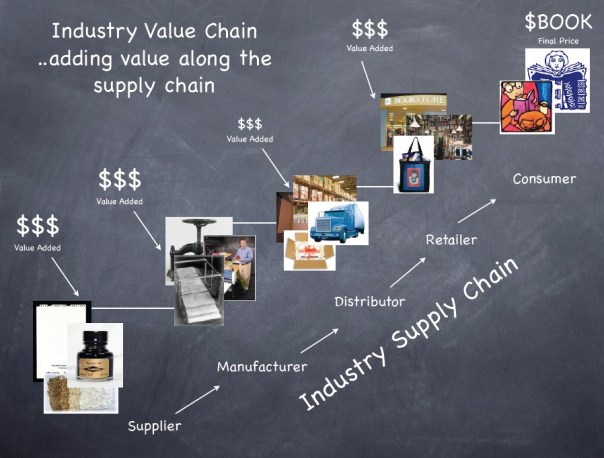
The traditional view on the value chain is to concentrate on the core activities. So almost all consumer electronics, computer or mobile equipment firms have outsourced their production to specialized manufacturers, so-called contract manufacturers or electronics manufacturing services (EMS). The western firms like Apple, Dell or IBM concentrate on the design, R&D, marketing and sales of the devices and leave the manufacturing to EMSs like Flextronics(165.000 employees) or Foxconn (113.000 employees).  Outsourcing manufacturing to specialized firms is the norm in their industries. Foxconn manufacturers for Apple and Intel while Microsoft is a customer of Flextronics.

This architectural or operational model looks very convincing since the story line “Concentrate on the core” sounds very plausible. By concentrating on your core capabilities, you focus on what you are strong at. In the case of Apple, that is design, usability, marketing and branding.

The perils of the “core”

However, there is a peril in this model as well, particularly when you are not as strong in core capabilities. E.g. Hong-Ta Corporation was the manufacturer of the innovative Palm Treo 650 or of the Compaq iPaq, one of the first smartphones.  Today, HTC as the firm is known today is very strong in smartphones and was one of pioneers in phones with Google’s operating system Android. Interestingly, Palm and Compaq are today irrelevant in the growing markets for smartphones. And both former pioneers are now part of Hewlett Packard.

Backwards Integration: You can do the opposite as well

At the same time as the IT and electronics industries are following the mantra of “concentrating on core competencies” other firms in other industries do just the opposite. Let’s look at food companies. (more…)

Brands are the icing on the business model

Tuesday, November 16th, 2010

How do brands and business model work together? That is a key question for successful companies because if they do not align brand and business model it will backfire, probably not in the short run but surely in the long run.

Branding is a hot topic. Brands give products the magic touch. With branding regular, normal products morph into highly desired status symbols customers are willing to pay a premium for. Branding worked very well in the last years but is branding sustainable?

Brands are not sustainable if the foundation is missing

Branding is not sustaining when you have a business model that does not support your brand or vice versa, your brand promises something you cannot fulfill. If you focus too much on branding you create over the long run, a perception gap between what you promise and what you deliver. It is like the icing on the wedding cake. It looks great but very rarely does a wedding cake taste as good as it looks.

Let us look at one example.

The Ergo Insurance Case

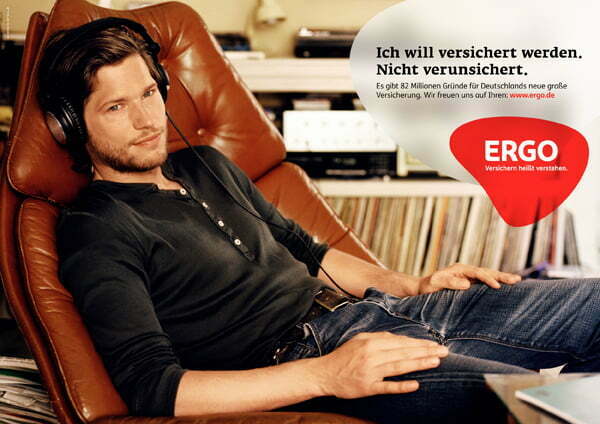
The German insurance company Ergo Gruppe is the holding company of the well-know household brands Victoria Insurance and the famous Hamburg Mannheimer Insurance. Lately, Ergo decided to consolidate its brands under the fresh brand Ergo. Ergo tapped into people’s discomfort that insurance companies are great in sales but very bad when it comes to ease to understand the policy condition and in the case of a claim.

From this customer insight of discomfort with traditional insurance companies Ergo created the claim “Versichern bedeutet verstehen.” or in English “To insure means to understand”. Ergo used all communication channels and very well made commercials to establish the brand Ergo among German consumers. In the ads, people ask why it is so difficult to get insured, why the agents do not take them serious. (more…)

Business Modelling: Value Propositon vs. Value Perception

Tuesday, April 20th, 2010

The value proposition is the defining moment of any business, not the product or the service you offer. But it is important to realize that it is not of importance what you write in or think up for your business plan but what customers perceive to be your value. And there can be a huge mismatch.

The classic business plan is a plan of promises. On paper the value proposition almost always sounds promising but in reality the customers have quite often a different perception of the firm, of its products or services. There is a mismatch between value proposition and value perception, the perception gap:

Why: Simply put!

  1. you do not get the message across to your customers since your distribution and marketing channels are too weak or
  2. you do not fulfill the value proposition you offer with your business model you actually have.

The Perception Gap

In most cases, managers will say that the first reason that they just don’t get their message over to the customer is the main cause why they cannot close the perception gap. So in their belief they spent more money on communication and sales and try to persuade potential customers that they offer the best value.

This is the typical behavior of the past (more…)

Get Adobe Flash playerPlugin by wpburn.com wordpress themes