Posts Tagged ‘case’

Design thinking, Ideo and disruptive business model innovation

Wednesday, November 25th, 2009

To be honest, I get a bit bored about the mantra that design thinking will solve the problems of large corporation. Well, when I go through the case studies at Ideo I am extremely impressed by their client list but not about the output. I have seen several design thinking sessions and I am not impressed at all with the output. The results are very often: More-of-the-Same but with fancier design.

Wer hat es erfunden? Novo Nordisk insulin pen

Where is the invention from design thinking that changed the industry? Where is the iTunes or the Kindle of Ideo? The problem with design thinking starts very early in the process with the problem definition phase. And that is where large corporations fail. They define the scope too narrow and than you get nice new things that sustain your current business but not new business models that rock your industry and yourself.

Ideo is a very good (self-) marketing & design firm but not an industry rocking firm. Large firms just love Ideo because Ideo just offers such a well designed process to solve the big problem of “being not innovative”. You hire Ideo for comforting yourself for not using your own common sense and your own customer insights. You just outsource your understanding of the customer to Ideo.

And how innovative are Ideo’s ideas?

Let’s take the example of the insulin pen Ideo describes on its homepage as a case [update 22nd Oct 2010, case is not available on IDEOs homepage any longer due to redesign of page]. (more…)

Culture and the Business Model: We are humans

Tuesday, October 13th, 2009

In the discussion on business model innovation an important point is missing: the culture in which the business is conducted. A business is all about people “creating” customers.

Businesses are not a technical machine with input and output factors. Businesses are places where human beings work together for a common goal and therefore the culture in a business is a defining part of a business and therefore also for the business model.

Most definitions of what a business model is are rather technical. We talk about components, patterns, building blocks. We make a lot of fuss about how we rearrange the components as if they were just Lego bricks. We believe that having in mind a great new business model is already a business model innovation.

Where are the people?

Ups, no! That does not work. Somehow the most important “building block” of a business is missing: The human being that designs, shapes and makes the business work and the customer who has to buy into the new value proposition and pay. And here again we have the human factor. “[I]nnovation is not what innovators do but what customers adopt.” We always have to remember what Michael Schrage is saying. It is the customer acceptance that makes an innovation. (more…)

Dell and Perot: The end of a business model (innovation)

Friday, September 25th, 2009

Dell announced on September 21, 2009 that it will acquire Perot System for $3.9 billion. Dell was the poster child of business model innovation. It had “invented” the direct sales model for PCs. Instead of going via resellers Dell sold its computers directly via telephone or the Internet to its customers. Now, Dell is extending its traditional business into services. Will this work?

I feel very ambivalent about the announced deal. First, Dell pays a premium of a 61% for Perot Systems. That is a huge premium and from my time as an investment banker at Lazard I know it is very difficult to recoup and justify such a premium. But even more problematic is that with the purchase Dell does not solve its problem with its current business model.Quo vadis Dell and Perot Systems

The deal makes sense from a corporate strategy perspective. Dell is suffering in its core business a steep fall in prices. For many years Dell was the price leader but now HP tries to undercuts Dell. The first time in the history of PCs, the new Microsoft operating system Windows 7 will need fewer resources than the previous version, Windows Vista. That is bad news for computer makers that usually expect a big boost in sales from a new operating system.

Dell’s former business model innovation

In the past Dell’s value proposition was to sell individually configured PCs and servers at a low price. (more…)

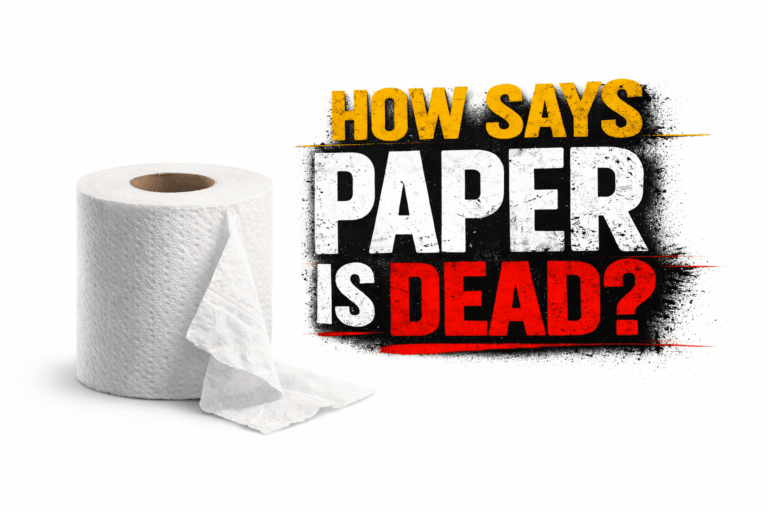
Who says paper is dead? business model innovation in the newspaper industry

Thursday, September 17th, 2009

The newspaper industry is suffering these days. Besides the economic crisis that leads to less advertising spending the traditional business model is under attack by the Internet. The large papers have reacted with large Internet activities that attract a lot of traffic. But the revenues of the online ventures are not sufficient to compensate for the decline in print. So what shall they do?

I had the pleasure recently to be invited back to my university, the University of St. Gallen, to give a speech on business model innovation in the media industry. Prof. Martin Eppler was so kind to sponsor the discussion. I used 8 theses to present my thoughts. Below you find the slides of my presentation.

Tradition is not a business model

The media industry is an interesting case since their traditional business model is under attack by new technologies. I use the music and the newspaper industry as cases to make my points. Although both are affected by the Internet, they face (more…)

Karstadt: Death of a legend (business model)

Friday, June 12th, 2009

The German retail and travel conglomerate Arcandor AG formerly known as KarstadtQuelle AG filed on June 9th 2009 for insolvency. It claims that the financial crisis is the reason. It had asked the German government in May for state aid but the government refused. But is the financial crisis the real reason for the dire situation? I do not think so. The business models of its retail activities (Karstadt and Quelle) are just dead. The management did not innovate on its business model and that is the reason for failure.

Most writers and bloggers take the music industry as a prime example for an industry that failed to innovate its core business model. But there are many other industries where failure to innovate its core business lead to their decline. A sad prime example of missed innovation is Karstadt, a large department store chain in Germany and Quelle, a German mail order powerhouse.

The Karstadt case is typical for a corporation that business model is dated. Instead of rejuvenating its business model or finding new business ideas the old business model is defended and by consolidating the industry even reinforced.

The next lesson is that all activities at corporate level like selling non-core assets do not solve your problems of an ailing business model. The solution must be found on the business level not on a corporate level. If you cannot fix it, than sell or close it early. Success in business is not defined on corporate level but by its business model!

In May 2009, the CEO of Arcandor, Mr. Eich asked for “a state guarantee to temporarily bridge the gap of the currently non-functioning financial markets.” Arcandor did not want to have any handouts nor a state participation in the company. It promised that it will repay the loan “to the last penny.” It claimed that the credit crunch is the main reason for its financial stress.

But is this really true?

The only constant in retailing is business model innovation

Retail markets in general are dynamic markets where new business models destroy old ones and create new fortunes. Zara, Aldi, H&M, IKEA or Carefour all reinvented their retail category and made their owners rich. But since the whole market did not grow as fast as the newcomers, the incumbents suffered losses in market shares and sales. (more…)

Slides: Growth by business model innovation (2 part)

Thursday, May 28th, 2009

These are the slides of the second part of my lecture I gave at Leuphana University in Lüneburg in May. The first set of slides you find here.

TiVo: Failed Expectation

Friday, May 1st, 2009

Business model innovations sound great as a strategy and if successful you can create a new market and escape the traditional competitors in your ex-industry. But the most important point in any innovation is not to have an idea, is not great execution, but the adoption of the innovation by  customers. And that is the crux of business model innovation: The diffusion of the innovation. The TiVo is a perfect example.

Ten years ago the TiVo digital video recorder was presented at a broadcasters’s convention in Las Vegas. People TiVo Boxexpected that the TiVo as an easy time-shift machine would change the TV industry for ever. The great opportunity for TiVo’s users was to watch a show whenever they wanted and without commercials since they could skip that annoying part. The latter was seen as the death of the TV industry as we know it today since their revenue model is based on these commercials that nobody needed to see anymore with a TiVo.  As predicted the TiVo sold well particularly as the price fell. But since 2007 the user base has fallen and the the TV industry is still existing as we know it.

It is the customer, stupid!

The Economist from April 25th, 2009 summarizes the problem with the TiVo very well: “Just because technology enables people to do something does not mean they will, particularly when it comes to a medium as indolence-inducing as television.” (more…)

Keynote on Business Model Innovation at Fraunhofer Gesellschaft

Thursday, April 23rd, 2009

The THESUS program seeks to develop technologies and applications for the Internet of services. The program is sponsored by the German government and supported by German IT heavy weights like SAP or Siemens and technical universities in Germany.

The program is based on several use cases where technology is supposed to solve a real world problem. The aim of the program is to build with semantic technologies a new and better knowledge infrastructure. For webbies you can also call it Web3.0.

I was invited to give a keynote on business model innovation at a THESEUS workshop at the Fraunhofer Gesellschaft, (more…)

Business Model Innovation on the Web

Wednesday, April 8th, 2009

Yesterday, I gave a presentation at the InternetBriefing Zurich. Here it is. Enjoy it. I use Experteer, Linguee, blacksocks and digitalSTROM as case studies to illustrate business model innovation.

Great Innovation: Getting a job done

Thursday, March 26th, 2009

Often one hears that everything is already invented and that only incremental improvements are possible. Well, tell this to Mr. Krinner. He has invented two products that just changed the way how jobs are getting done. He invented the Krinner Christmas tree stand and the ground screw.

Probably, you never heard of Mr. Krinner and his company. But if you have no problem to put up your Christmas tree straight and safely, than you probably use his tree stand. His tree stand is not high tech, it just solves the problem to erect a Christmas tree easily and with high stability.

Krinner Christmas tree stand

The second innovation by Mr. Krinner is as simple as the tree stand: The ground screw. What the heck is this? You probably have never heard of this product category before and right, Mr. Krinner invented this product category. But you know the problem Mr. Krinner solved: Fixing something in the ground. (more…)

Get Adobe Flash playerPlugin by wpburn.com wordpress themes