Posts Tagged ‘business model canvas’

Markets vs customer driven business model design

Saturday, September 3rd, 2011

Do you have to be market-oriented or is this again one of the buzz words that hides more than its reveals? Or should you be customer driven? Let’s take a look at the two words and concepts and see why Alex and I have chosen not the term market but customers for our canvases.

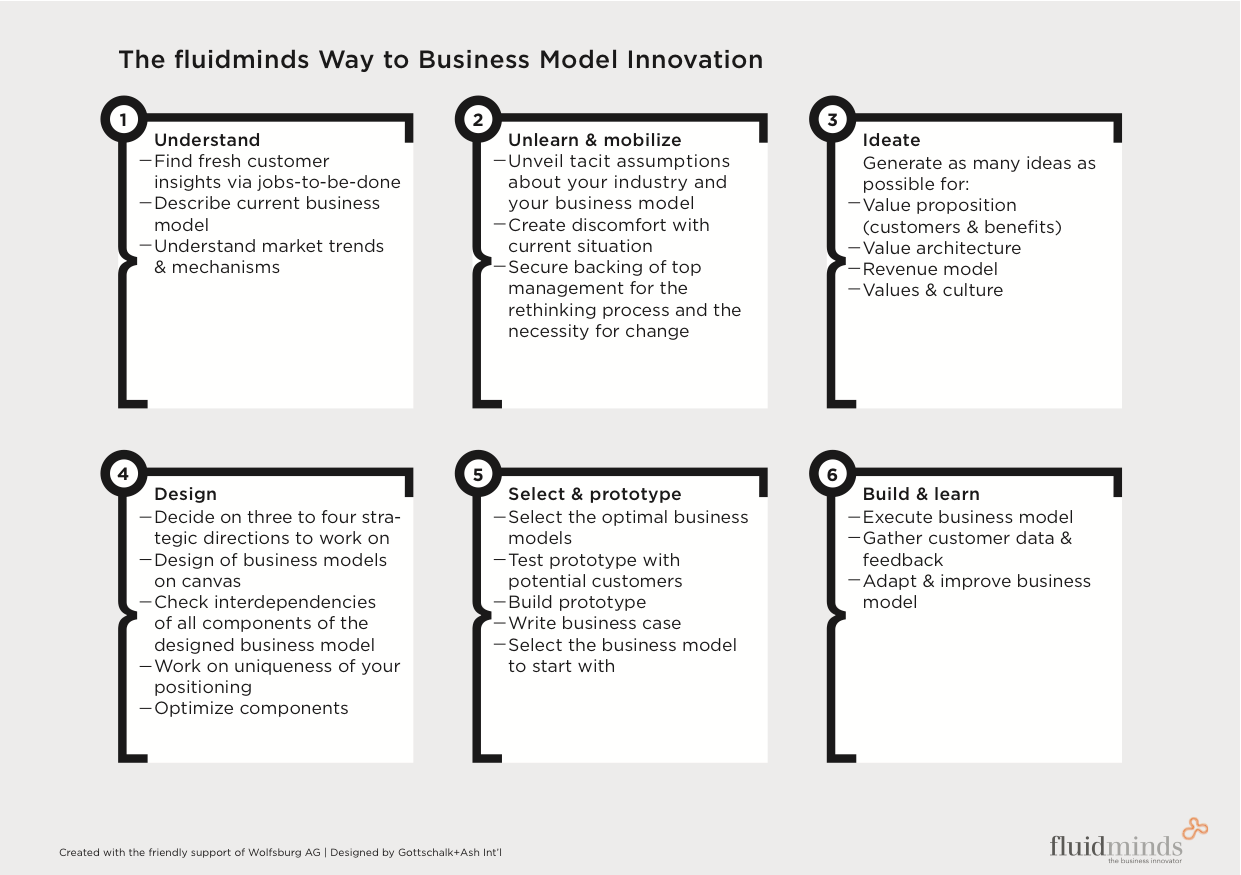
I just return from a workshop for entrepreneurs in Wolfsburg, the birthplace of Volkswagen. We used the business model canvas to focus the entrepreneurs and their coaches on the core building blocks of a business models.

Interestingly, most participants of the workshop always talked about markets, that we need to be more market oriented, that we have to conquer new markets. But is this true?

Customers pay your bill not "markets"

Markets, top-down approach

Markets are the sum of customers that spent money and therefore have shown a demand in the market. But a market is abstract and impersonal. You can not sell your product to a market. There is no Mrs Market to write a bill to and that is exactly the problem for entrepreneurs. You might be in a great, growing and profitable market but that does not mean you have one single customer who pays your bills.

Markets is a top-down approach very well suited for analyst and consultants. The market is great for analysis but not good to sell something to.

Customers, bottom-up approach

Let’s take a look at customers. As a business you need an individual client that is willing to pay for the service or product you offer. (more…)

The Art of Painting on the Business Model Canvas

Thursday, June 30th, 2011

We have a great tool for visualization of a business model: the canvas. There is a hype on visual thinking and business model design. But can the tools deliver?

In the last years, I have seen many uses of the business model canvas to real cases. Some showed astonishing results, others were disappointing. Why? Any tool is only as good as the user. A fool with a tool is still a fool. But also: A genius without the right tool might be a fool. So let’s see, what makes the difference.

Visual Thinking = Thinking with Visual aid

Visual Thinking is often mistaken as nice visualization. A bad idea does not become better by visualization. Visual Thinking is great since you think in pictures. Visualization can help to make your thinking better, to see more options and see the interdependencies among all components. But you still have to think!

There was a reason why god gave us two brain hemispheres: Visual Thinking is the combination of analytical and creative thinking. So do the thinking.

Be precise in your thinking

Due to the limited space, people tend to be pretty imprecise when filling out the canvas. They fill the canvas as if it is just a form, not the master plan for a venture or for the future of your firm. That happens particularly often in large corporations where the people are so stuck in their old thinking. (more…)

What business are you in? Business models as social constructs

Wednesday, June 8th, 2011

“What business are you in?” sounds like a simple question. But it’s not. How you define your business determines which direction your firm can go. Based on your answer, you define and limit your strategic options.

In a company, the business model is defined by a dominant group of people. They have a common understanding of what business they are in and how they create value. However, the business model is not an absolute reality. It’s a social construct of dominant opinion makers, e.g. your top management. This is important to understand.

By taking a different look at your business, and thereby challenging your dominant logic, you can identify more and different strategic options for your firm. But beware; by doing so, you are also challenging the top dogs in your firm.

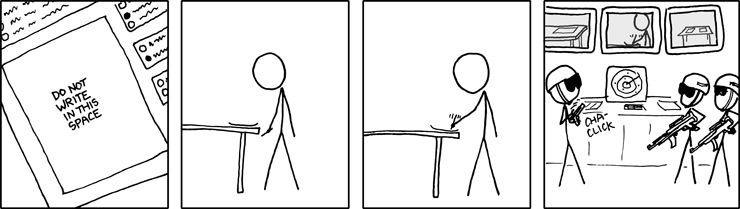
Life is not that simple. Changing perspectives by xkcd.com

How you define your business depends on the dominant logic of your management

Considering the definition of what a business model is, it seems easy to describe the business model of a company. You can use  the business model canvas (Alex Osterwalder‘s or mine) and then you describe how value is created. Often we assume that regardless of who describes the business model, we will end up with the same description. This is a mistake.

(more…)

Design thinking, Ideo and disruptive business model innovation

Wednesday, November 25th, 2009

To be honest, I get a bit bored about the mantra that design thinking will solve the problems of large corporation. Well, when I go through the case studies at Ideo I am extremely impressed by their client list but not about the output. I have seen several design thinking sessions and I am not impressed at all with the output. The results are very often: More-of-the-Same but with fancier design.

Wer hat es erfunden? Novo Nordisk insulin pen

Where is the invention from design thinking that changed the industry? Where is the iTunes or the Kindle of Ideo? The problem with design thinking starts very early in the process with the problem definition phase. And that is where large corporations fail. They define the scope too narrow and than you get nice new things that sustain your current business but not new business models that rock your industry and yourself.

Ideo is a very good (self-) marketing & design firm but not an industry rocking firm. Large firms just love Ideo because Ideo just offers such a well designed process to solve the big problem of “being not innovative”. You hire Ideo for comforting yourself for not using your own common sense and your own customer insights. You just outsource your understanding of the customer to Ideo.

And how innovative are Ideo’s ideas?

Let’s take the example of the insulin pen Ideo describes on its homepage as a case [update 22nd Oct 2010, case is not available on IDEOs homepage any longer due to redesign of page]. (more…)

Get Adobe Flash playerPlugin by wpburn.com wordpress themes